
Articles
What happens when someone hacks your freezer?
3 Minutes Read · Published 05 Nov 2026 · By Allison Hunter
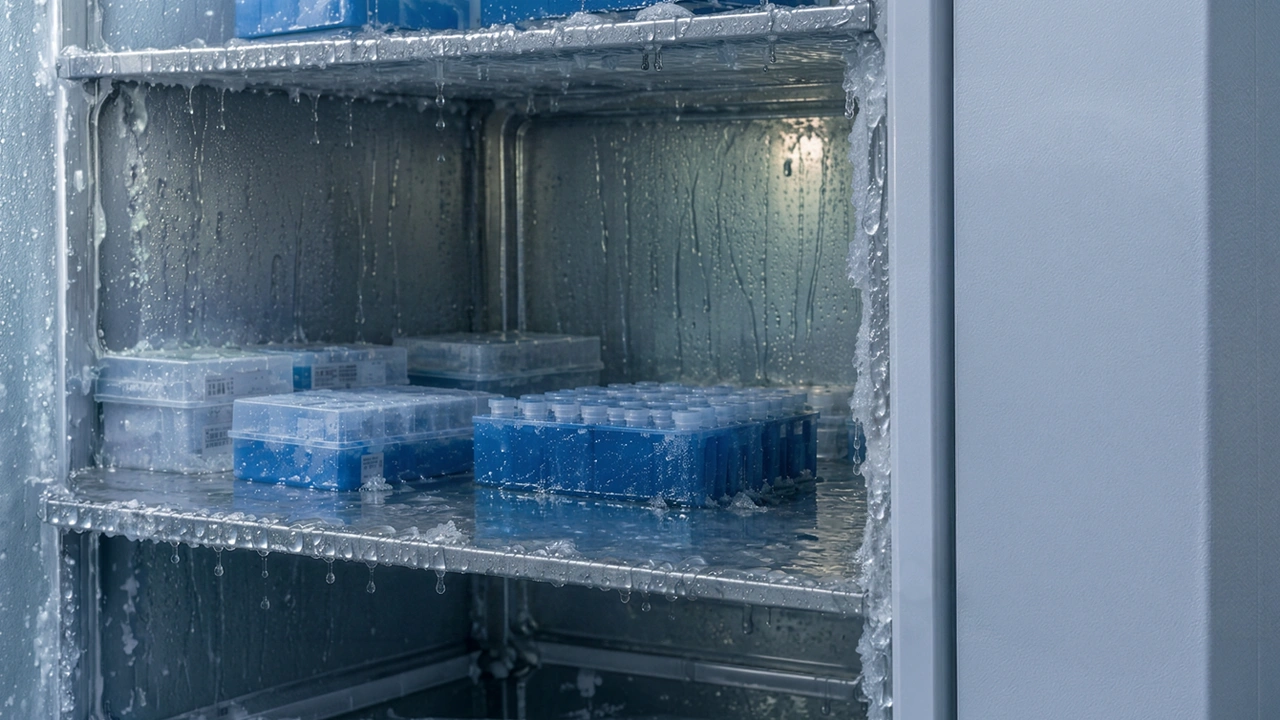
It sounds like a slightly ridiculous question, until it actually happens.
In recent weeks, supermarkets across Europe have found themselves dealing with a new kind of problem. Refrigerators and freezers have been remotely manipulated, with temperatures in some cases reportedly set as high as 50°C.
Sweden, Belgium, Luxembourg, Estonia, Ireland, the Netherlands and Finland have all reported incidents. This follows a major attack in France in October that affected hundreds of stores. More recently, several blood banks in France have also been targeted in cyberattacks, highlighting that the threat extends beyond retail and into critical healthcare infrastructure.
The immediate consequence is obvious. Food gets destroyed. But there is a much more uncomfortable question for laboratories, pharmaceutical facilities and other regulated environments.
What if the same thing happened to you?
A Freezer Is No Longer Just a Freezer
Laboratory equipment is increasingly connected. Freezers, refrigerators, HVAC systems, building management systems and other critical infrastructure can be remotely monitored and controlled. There are very good reasons for that.
It makes facilities easier to operate and problems easier to diagnose. It also creates another route into equipment that may contain years of research, irreplaceable samples, stability material, reagents or products worth considerably more than the equipment itself.
The recent supermarket attacks provide a very physical demonstration of what a cyber incident can look like. Not stolen passwords. Not an inaccessible email account. A freezer getting hot.
And if the system responsible for controlling the freezer is compromised, there is another question worth asking:
Is your monitoring independent of it?
Security Starts With the Architecture
There is a good reason to consider keeping monitoring independent from the systems it monitors.
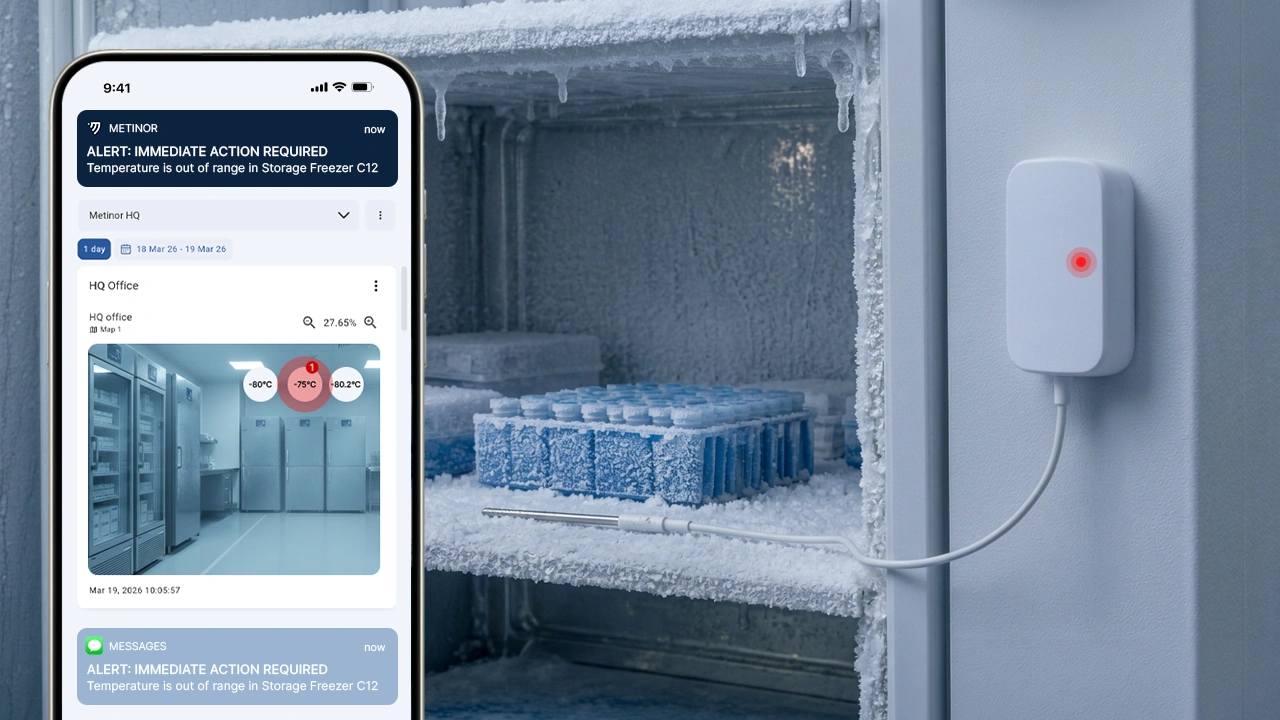
Metinor can operate as a separate monitoring layer without relying on the control system of the freezer, refrigerator or other equipment being monitored. If required, it can also operate independently of the facility’s local network infrastructure. That separation can be particularly valuable when something goes wrong.
Communication is encrypted from the sensors through to the cloud, including while data passes through the gateway. The gateway initiates communication outbound, so incoming connections or exposed inbound ports on the customer’s network are not required.
Just as importantly, monitoring does not have to mean control. Metinor can monitor a freezer without having the ability to change its temperature setpoint. So if somebody gains access to the system controlling that freezer, there can still be a separate system watching what is actually happening inside it.
That does not mean integration and control are inherently undesirable. For many facilities, integration between systems is extremely useful. The important point is that monitoring can be kept separate where independence matters.
No connected system is completely immune to cybersecurity threats. The objective is therefore not to claim that one architecture eliminates the risk. It is to avoid having every layer depend on exactly the same infrastructure. Because when your primary system is compromised, the last thing you want is for your monitoring system to be compromised along with it.
Retrofitting Does Not Need to Become an IT Project
Adding an independent monitoring layer can be remarkably simple.
Metinor sensors are wireless, weigh around 8 grams and have a battery life of up to 15 years. They can be installed in existing laboratories and facilities without running new cables or replacing the equipment already in place.
There is no local sensor configuration or pairing required. Sensors can simply be placed where they are needed and brought online quickly. That makes independent monitoring possible not only for new facilities, but for freezers, refrigerators and critical spaces that may have been operating for years.
Nobody knows whether attacks like those currently affecting European supermarkets will become common in laboratories. Hopefully they never do. But hundreds of refrigerators suddenly heating up because somebody on the other side of a computer decided they should is a useful reminder of something: Your primary system should be secure.
But it probably shouldn’t be the only system you trust to tell you that something has gone wrong.
If you want to look at adding an independent monitoring layer to your laboratory, cold storage or other critical environments, talk to us about your current setup.
Related reading
Contact us for a demo

Plug and Play
Install in seconds. Not weeks.
We streamline inspections, audits, and facilitate preventive maintenance. Our mobile-first approach means you can deploy sensors without IT involvement.
-
Plug in the Gateway
Place the gateway and plug in the power cable.
-
Place the Sensor
The sensor automatically connects to the gateway.
-
You're Live
Data starts streaming to your dashboard immediately.



Ready to upgrade your monitoring solution?
Get in touch and our team will help you make the switch today.


